Lagos Television Marks 46 Years With Plans for Wider Coverage and Digital Expansion
At a glance
- Lagos State Government investment covers LTV building improvements, new transformers and transmission antennas to extend terrestrial coverage.
- LTV reorganized its Social Media Department as Lagos Television Digital Service, which handles digital distribution and live streaming on YouTube.
- A subsidiary is reportedly developing a mobile streaming app intended to broaden digital delivery and generate revenue, not yet launched.
- The Lagos Television Broadcast and Media Academy now trains about 250 interns, up from roughly 30 per season previously.
- Founded in October 1980, LTV began broadcasting on November 9 that year under then-Governor Alhaji Lateef Jakande.
Broadcast upgrades and digital distribution
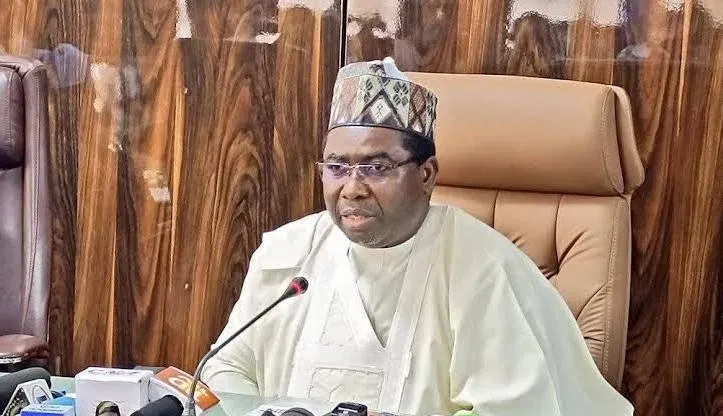
Oyekanmi said investment by the Lagos State Government under Governor Babajide Sanwo-Olu covers improvements to LTV's buildings, new transformers and transmission antennas. The upgrades are expected to extend terrestrial coverage, allowing more residents to receive its programs without depending solely on paid television platforms.
The general manager described competition among Nigerian broadcasters, especially those in Lagos, and the constraints of state-owned organizations as challenges. Even so, he said LTV had made an impact over its 46 years and continued to serve audiences in all five divisions of Lagos State. Management's priorities include reaching viewers within and beyond the state, developing programs and making content easier to access.
LTV has also reorganized its Social Media Department as Lagos Television Digital Service. Oyekanmi said the unit handles digital distribution, with content already streaming live on YouTube and other social media platforms.
As of late 2026, Oyekanmi said, the subsidiary Lagos Television Digital Service Limited was developing a mobile streaming app. The project is intended both to broaden digital delivery and to generate revenue; it has not been described as a launched service.
Practical training and a larger intern intake
The station's Lagos Television Broadcast and Media Academy offers practical training to students, interns, corps members and staff. Oyekanmi said it prepares young people studying mass communication, advertising, public relations and related subjects for work in the media and creative industries.
LTV previously accommodated about 30 interns per internship season, he said, compared with nearly 250 now undergoing training. Management wants younger people to take part in the station's operations while gaining skills for broadcasting careers.
Programming, facilities and public scrutiny
Based at the LTV Complex on Lateef Jakande Road in Agidingbi, Ikeja, the station also earns revenue outside broadcasting by hosting public and private events. Its venues include De-Blue Roof, Combo Hall, Hall 1, Hall 2, Arena A and B, and BOS Hall.
News, public affairs, sports, entertainment and culture have all featured in LTV's programming. Its shows include The Conversation, Tori Tori, Sports Splash, City Scene, Issues and Trends, Pendulum, Legends, Little Sparks, Breakfast in Bed, Idile Alaayo, Kaaro Ojiire, Ibile Update, State on Focus and Lagos Transportation Agenda.
During a recent appearance on The Conversation, Lagos State Deputy Governor and All Progressives Congress governorship candidate Dr. Kadri Obafemi Hamzat congratulated Oyekanmi, management and staff on the anniversary. He praised the upkeep of the facilities, saying their condition reflected the state government's investment.
Hamzat also welcomed LTV's reporting on government activities and its willingness to subject them to scrutiny. "Sometimes, you are critical, which is good," he said. "This lets us know where we need to improve as a government."
From its 1980 launch to today's channels
Established in October 1980, LTV began broadcasting on November 9 that year under then-Governor Alhaji Lateef Jakande. It was Nigeria's second television station established by a state government, following the Broadcasting Corporation of Oyo State, and the country's first to operate on both Very High Frequency and Ultra High Frequency bands.
Its broadcasts initially used VHF Channel 5. A frequency dispute with the Nigerian Television Authority led to a move to VHF Channel 8 and the call sign LTV 8. In 1983, a military-era directive restricted non-NTA stations to UHF, prompting LTV's move to Channel 35, which it still uses.
Another early service was a continuous weekend broadcast lasting 60 hours, from 7 p.m. Friday until 7 a.m. Monday. LTV's own history describes the Lagos Weekend Television service of the early 1980s as Africa's first marathon television station.
A mysterious midnight fire in September 1985 destroyed the station, including its studios, library, offices, equipment and official records. LTV was largely dormant for about a year and a half afterward.
In June 2008, LTV became the first and, at that time, only state-owned television station carried on DStv. Then-Governor Babatunde Fashola performed the switch-over ceremony for its debut on Channel 129. It later moved to Channel 256. Alongside its terrestrial broadcasts on UHF Channel 35, LTV is now available on DStv Channel 256, GOtv Channel 120 and StarTimes.