Nasarawa urges legal training as workshop examines rules for confessional statements
At a glance
- Dr. Labaran Magaji delivered the keynote address for Governor Abdullahi Sule at the workshop organized by LOAN Nasarawa.
- Sessions examined how investigators obtain confessional statements, how prosecutors submit them and how judges decide admissibility.
- Chief Judge Aisha Lawal Uthman, represented by Abdullahi Shammah, said suspects are often discharged because confessional statements were taken without following the rules.
- Section 17(2) of the 2015 Act lets a suspect have a lawyer of their choice present, or another listed person if no lawyer is chosen.
- The Supreme Court's 2024 decision in FRN v. Akaeze held that audiovisual recording of confessional statements is mandatory, and noncompliance invalidates the statement.
Training and prosecution standards
Dr. Labaran Magaji, secretary to the state government, delivered the keynote address for Governor Abdullahi Sule at the workshop organized by the Nasarawa chapter of the Law Officers Association of Nigeria (LOAN). Sessions examined how investigators obtain confessional statements, how prosecutors submit them in court and how judges decide whether they are admissible.
Magaji acknowledged law officers' dedication to prosecuting cases but said courtroom experience must be supported by continued study of changes in legal principles and procedure.
"You are always excited going to court and reviewing case files, but without taking time to study emerging and trending legal issues, you end up losing cases rather than winning them," he said.
He said Sule's administration supported due process and the rule of law and opposed political interference in judicial proceedings. With Nasarawa and the country entering an active electoral period, Magaji described the training as particularly timely.
LOAN's state chairman, Raymond Anzaku, said recurring dismissals of criminal cases on technical grounds prompted the association to convene the multi-agency workshop. Umoru, an association representative, said confessional statements accounted for a substantial share of the evidence used by state prosecutors, making adherence to legal safeguards essential.
Chief judge warns of procedural failures
Nasarawa Chief Judge Aisha Lawal Uthman, represented by Abdullahi Shammah, raised concerns about suspects frequently being discharged because investigators had not followed the rules for taking confessional statements.
A lawfully obtained confession can strengthen the prosecution's case, she said, but courts must reject statements that fail to meet legal requirements. She warned that these failures could put public safety at risk by allowing people accused of serious offenses to return to society, where they might allegedly reoffend rather than face punishment that could deter others.
The chief judge pointed to safeguards in the Administration of Criminal Justice Law and the Evidence Act, including a lawyer's presence or video recording when required by the applicable law. She also identified shortages of technology and facilities as major obstacles to compliance for police and other security agencies.
Judges must remain impartial and decide cases using admissible evidence, the judiciary emphasized. Investigating agencies therefore need to observe the required procedures from the start of an investigation, not only when a case reaches court.
Umoru said recent legal developments had reinforced investigators' constitutional and statutory duties to demonstrate that statements were not extracted through coercion or torture.
Statutory safeguards and Supreme Court rulings
The legal framework has changed substantially since the period before the Administration of Criminal Justice Act 2015. In commentary published by TheNigeriaLawyer, Obioma Ezenwobodo explained that Nigeria previously had no mandatory framework governing the recording of confessional statements. Investigators instead had the nonbinding English "Judges' Rules" as guidance; a breach alone did not require a court to exclude a confession.
Section 17(2) of the 2015 Act allows a suspect's statement to be taken with a lawyer of the suspect's choice present. If the suspect has no chosen lawyer, those who may attend include an officer of the Legal Aid Council of Nigeria, a civil society organization official, a justice of the peace or another person chosen by the suspect. The person attending may intervene only to carry out their role.
Kabir Abdulrahman's commentary in BarristerNG describes the Supreme Court's 2024 decision in FRN v. Akaeze. The court held that sections 15(4) and 17(1) and (2) of the federal Act impose a mandatory duty on law enforcement agencies to make an audiovisual recording of a suspect's confessional statement. The requirement leaves no discretion, and noncompliance invalidates the statement.
The commentary also cites Friday Charles v. The State of Lagos, decided in 2023. In that case, the Supreme Court held that section 9(3) of the Lagos State Administration of Criminal Justice Law 2011 was a mandatory procedural requirement. A confession taken in breach of it was "of no effect" and "impotent and worthless," the court held.
Investigators, prosecutors and judges brought together
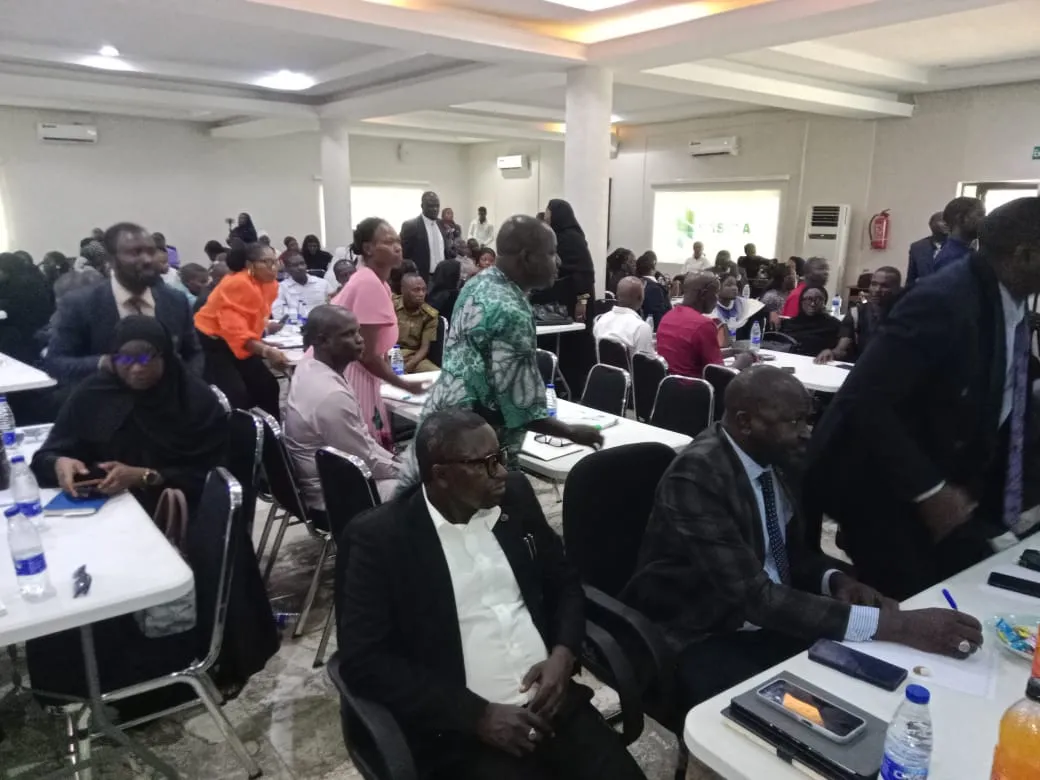
Umoru described the workshop as one of the state's largest gatherings of justice-sector stakeholders. He said LOAN had brought institutions together to address procedural problems affecting both investigations and prosecutions, with facilitators chosen to close gaps in understanding among investigators, prosecutors and judicial officers.
Agencies represented included the Nigeria Police Force, Nigeria Security and Civil Defence Corps, Department of State Services, National Agency for the Prohibition of Trafficking in Persons and National Drug Law Enforcement Agency.
The gathering also included representatives of the state government, the chief judge and the Magistrates Association of Nigeria, along with civil society human rights advocates and the Nigerian Bar Association's second vice president.
Magaji asked participants to engage with the instructors, contribute to the sessions and put the training into practice in their respective roles to strengthen justice delivery and protect society from crime.
Among the facilitators was Justice Agyeman, whom Umoru said had previously rejected confessional statements that did not meet legal requirements. Agyeman was expected to offer practical guidance on what courts require and how to apply the law.